
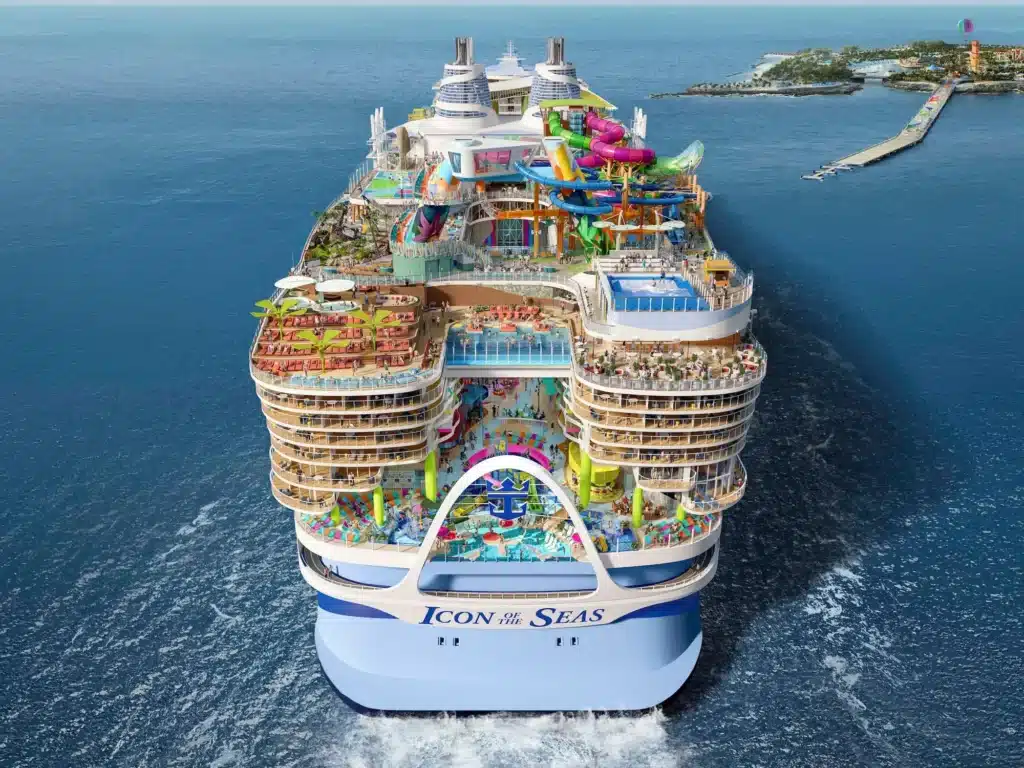
Royal Caribbean destinations cover a wide range of cruise styles, from easy Bahamas getaways and Caribbean beach itineraries to Alaska, Europe, Asia, Australia, Hawaii, the Panama Canal, and longer repositioning sailings when available. If you are trying to figure out where Royal Caribbean ships travel, the better question is usually not just “Where can I go?” It is “What kind of vacation do I want this cruise to feel like?”
I help travelers sort through this decision often, because the destination can change the entire pace of the trip. A 4-night Bahamas cruise with a stop at Perfect Day at CocoCay feels very different from a 7-night Alaska sailing, a port-heavy Mediterranean cruise, or a longer Panama Canal itinerary. If you want a more port-focused starting point, my guide to the best Royal Caribbean ports is a helpful next step after you understand the bigger destination picture.
This guide is best for travelers who are still early in the planning process and want to understand the major Royal Caribbean destinations before choosing a ship, sailing date, or cabin. It may be less helpful if you already have a specific ship and week locked in, because at that point the decision becomes more about the exact itinerary, port times, airfare, and room location.
My biggest advice before you fall in love with a ship photo or a low starting fare: look at the map, the departure port, the number of sea days, and the time in port. Those details often matter more once you are actually there than people expect.
Quick Answer
Royal Caribbean sails to more than 300 destinations worldwide, with itineraries across beach regions, scenic routes, cultural ports, private destinations, and longer ocean crossings. The best Royal Caribbean destination depends less on the name of the region and more on the vacation pace you want.
Best For
Royal Caribbean is a strong fit for travelers who want lots of destination choices paired with active ships, family-friendly entertainment, and flexible itinerary lengths.
Not Ideal For
It may not be the best fit if you want a very small-ship, quiet, destination-only experience with minimal onboard activity.
Worth It?
Yes, Royal Caribbean destinations can be very worth it when the itinerary matches your travel style, budget, and preferred vacation pace.
The key is narrowing the choices in the right order: destination style first, departure logistics second, ship features third, and then cabin and add-ons.
Want Help Narrowing Down the Right Royal Caribbean Destination?
There are a lot of good options, but not every itinerary is the right fit for every traveler. I can help you compare destinations, ships, cabin locations, and total trip cost so the choice feels much clearer.
The main Royal Caribbean destination regions include the Caribbean, Bahamas, Alaska, Bermuda, Canada and New England, Europe, Asia, Australia, the South Pacific, Hawaii, Mexico, Central America, South America, and select longer repositioning cruises. Availability changes by season, ship deployment, and cruise schedule, so the exact ports and routes should always be confirmed before booking.
Destination choice matters before choosing a ship because not every ship sails every region. Some of Royal Caribbean’s biggest and most activity-filled ships are commonly associated with warm-weather routes, while other ships may be positioned for Alaska, Europe, or longer seasonal itineraries. If ship features are a major part of your decision, you may also want to compare how the fleet stacks up in my Royal Caribbean ships ranked guide.
This is also where budget starts to shift. A cruise fare is only one part of the total trip. Airfare, pre-cruise hotel nights, shore excursions, airport transfers, passports, travel insurance, Wi-Fi, specialty dining, beverage packages, and private destination upgrades can all change the final cost.
Quick Facts
| Category | Details |
|---|---|
| Destination Range | Royal Caribbean destinations include beach, scenic, cultural, private island, and longer global itinerary options. |
| Most Popular Regions | Caribbean and Bahamas cruises are often the easiest starting point for first-time cruisers. |
| Most Scenic Region | Alaska is a strong choice for glaciers, wildlife, mountains, and cooler-weather cruising. |
| Most Port-Intensive Option | Europe itineraries often involve more sightseeing, earlier mornings, and fuller days ashore. |
| Private Destinations | Royal Caribbean itineraries may include Perfect Day at CocoCay in The Bahamas or Labadee in Haiti, depending on the sailing and current operations. |
| Biggest Planning Variable | Departure port logistics can affect airfare, hotel needs, arrival timing, and overall stress level. |
| Best Cabin Consideration | Balcony cabins can matter more on scenic routes like Alaska or certain longer destination-heavy cruises. |
| Biggest Mistake to Avoid | Choosing only by ship without checking port times, sea days, and the actual itinerary flow. |
Royal Caribbean Destinations by Region
Royal Caribbean destinations are not all built for the same type of traveler. Some are easy, beachy, and low-effort. Some are better for sightseeing. Some ask more of your budget because the shore excursions become a major part of the experience. This is where I like to slow clients down a little, because the map can look exciting, but the vacation pace is what you are actually buying.
Caribbean and Bahamas cruises are usually the most familiar Royal Caribbean itineraries. They can include Eastern Caribbean, Western Caribbean, Southern Caribbean, and Bahamas routes, depending on the ship and departure port. These cruises are often a good fit for families, multi-generational groups, first-time cruisers, and travelers who want warm weather, beaches, pools, and a strong ship experience.
The Bahamas are especially popular for shorter cruises, and many itineraries include Royal Caribbean’s private destination, Perfect Day at CocoCay. This can be a very easy beach day because you are not dealing with the same level of independent transportation planning that you might have in a larger island port. If that stop is part of your itinerary, my Perfect Day at CocoCay guide can help you understand the layout, beach options, and which upgrades may be worth discussing.
Labadee in Haiti is another Royal Caribbean private destination stop that may appear on select Caribbean itineraries. Like CocoCay, details can vary by sailing and current operations, so I always recommend confirming the current itinerary and available experiences before booking. Private destination stops often reduce the amount of shore excursion planning you need, which can be a relief for families who do not want every day to feel scheduled.
Alaska cruises are completely different from a Bahamas or Caribbean trip. The scenery is the focus. You are looking at mountains, water, glaciers, wildlife opportunities, cooler weather, and ports that feel more expedition-like than beachy. Alaska also tends to be more seasonal, and popular sailing dates can book early, especially for families traveling during summer break.
Bermuda cruises can be a nice middle ground for travelers who want beaches but do not necessarily want a classic island-hopping Caribbean itinerary. Depending on the sailing, Bermuda itineraries may offer a slightly different rhythm, sometimes with more time in one area rather than quick daily port changes. That can feel easier for travelers who want to unpack mentally and not rush every morning.
Canada and New England cruises usually appeal to travelers who want coastal scenery, cooler weather, history, food, and seasonal atmosphere. These itineraries can feel calmer than a tropical sailing, but they are not necessarily “less active.” Port days may still involve walking, sightseeing, and transportation away from the pier.
Hawaii and Mexican Riviera cruises are destination-driven in a different way. Hawaii sailings, when available, often require more travel planning before and after the cruise because flights, time zones, and pre-cruise hotel choices matter. Mexican Riviera itineraries can be a good fit for West Coast travelers or anyone who wants warm-weather ports without flying to Florida, depending on available sailings.
Europe cruises may include the Mediterranean, Greek Isles, Norwegian Fjords, Baltic Sea itineraries, and other regional routes depending on the season. These cruises can be wonderful for travelers who want history, food, architecture, culture, and full days of sightseeing. They also require more planning energy. Port days can start early, transfers from port areas into city centers may take time, and shore excursions can become a larger budget priority.
Asia, Australia, and South Pacific cruises are better suited for travelers who are comfortable with longer travel days, bigger time zone changes, and more complex pre- and post-cruise logistics. These can be incredible trips, but I would not usually recommend them as the easiest first cruise unless the traveler already feels comfortable with international travel.
Central and South America itineraries may include ports such as Panama Canal region stops, Costa Rica, Colombia, Honduras, and other destinations depending on the route. Panama Canal cruises, in particular, tend to attract travelers who care about the itinerary itself and want a more distinctive cruise experience. These sailings can be longer and more schedule-specific, so they benefit from earlier planning.
Transatlantic, transpacific, and longer global itinerary options are available when ships reposition between regions or operate longer routes. These sailings often include more sea days and can be a good fit for travelers who enjoy the ship as much as the ports. They are not ideal for everyone, though. If you get restless with multiple sea days, I would think carefully before choosing one just because the fare looks attractive.
How to Choose the Best Royal Caribbean Destination for Your Trip
The best Royal Caribbean destination depends on your traveler group, your comfort with logistics, your budget, and how much you want the ship versus the ports to drive the vacation. I usually start by asking clients what they want to feel at the end of the trip: relaxed, entertained, adventurous, culturally inspired, or like they finally checked off a bucket-list place.
For first-time cruisers, the Bahamas or Caribbean are often the easiest entry point. The itineraries are usually familiar, the weather feels vacation-like, and the schedule may include a good mix of sea days and port days. Shorter Bahamas cruises can be tempting, but I do like to talk through whether three or four nights is enough time. Sometimes by the time you settle in, learn the ship, and find your rhythm, it already feels like you are packing again.
For families, I look at both the ship and the itinerary. A family with toddlers may care more about short flights, simple transfers, nap-friendly pacing, and easy beach days. A family with teens may care more about ship activities, later evenings, bigger waterslides or entertainment, and ports with adventure-style excursions. If ages matter in your planning, my guides to the best Royal Caribbean ship for toddlers and the best Royal Caribbean ship for teens can help you think beyond the destination map.
For couples and adults, the right destination often comes down to pace. Some couples want a warm-weather cruise with beach time, drinks by the pool, and easy evenings onboard. Others want Europe, Alaska, or a longer itinerary where the ports are the main event. Neither is better. They are just very different vacations.
For scenery and once-in-a-lifetime experiences, Alaska, the Norwegian Fjords, Greek Isles, and certain longer itineraries tend to stand out. This is where I would be more careful about cabin selection and shore excursion budget. A balcony may matter more when the view is part of the reason you chose the cruise.
For beach-focused travelers, the Caribbean, Bahamas, Bermuda, Mexico, and some South Pacific itineraries are usually more natural fits. Even then, not every beach day is the same. Some ports require transportation to reach the beach. Some beaches are better for calm water, some for snorkeling, some for a livelier atmosphere, and some for just putting your feet in the sand without much effort.
For travelers who want easier logistics, I would lean toward a convenient home port, a familiar region, and an itinerary that does not require complicated international planning. The easiest cruise on paper is not always the cheapest cruise, but it may be the one that feels smoother from the moment you leave home.
Royal Caribbean Destinations Compared
Comparing Royal Caribbean destinations is where the decision usually becomes clearer. Most travelers do not need every possible itinerary explained. They need to understand the tradeoffs between the few routes they are actually considering.
A Bahamas cruise and a Caribbean cruise may both sound beachy, but the experience can be different. Alaska and Europe may both feel bucket-list worthy, but one is more nature-driven and the other is often more culture- and city-driven. Bermuda may appeal to someone who wants a less rushed beach trip, while a Southern Caribbean itinerary may appeal to someone who wants multiple islands and a longer tropical escape.
Ship choice also belongs in this conversation. If your kids are excited about onboard activities, you may not want to choose a destination-heavy itinerary with exhausting port days every morning. If adults are choosing Europe for sightseeing, you may not care as much about the biggest ship features because you will spend so much time ashore.
Royal Caribbean Destination Styles at a Glance
This comparison is not about naming one “best” destination. It is about matching the itinerary style to the way you actually like to travel.
| Destination Style | Best For | Vacation Pace | Best Trip Type | Main Tradeoff |
|---|---|---|---|---|
| Bahamas | First-time cruisers, shorter trips, CocoCay-focused vacations | Easy and ship-friendly | Quick getaway or family starter cruise | Shorter sailings can feel fast if you want a slower trip |
| Caribbean | Beach lovers, families, groups, warm-weather travelers | Flexible, from relaxed to active | Classic cruise vacation | Islands vary more than people expect |
| Alaska | Scenery, wildlife, cooler weather, bucket-list travelers | Scenic and excursion-focused | Family, couple, or multi-generational milestone trip | Seasonality and excursion costs matter |
| Europe | Culture, history, food, sightseeing, experienced travelers | Port-intensive and active | Couples, adults, families with strong walking stamina | More planning, earlier mornings, and higher excursion needs |
| Bermuda | Beach travelers who want a different rhythm than island hopping | Often more settled and relaxed | Couples or adults wanting beach time with fewer port changes | Not the same variety as multi-island routes |
| Asia, Australia, South Pacific | Long-haul travelers and destination collectors | More complex and travel-heavy | Extended vacation or special occasion trip | Flights, time zones, and planning complexity increase |
| Panama Canal and Longer Routes | Travelers who enjoy unique itineraries and sea days | Slower, longer, and more itinerary-led | Retirement trips, milestone trips, experienced cruisers | Longer time commitment and less flexibility |
The biggest takeaway is that short cruises are usually more ship-focused, while longer itineraries often become more destination-focused. That is not always true, but it is a helpful starting point. A 3- or 4-night Bahamas cruise may be more about enjoying the ship, CocoCay, and a quick break. A 9- to 12-night Europe or Panama Canal itinerary is more about where you are going and how the days unfold.
If you are deciding between two similar sailings, look at port times before anything else. A port that sounds exciting may be less practical if the ship arrives late, leaves early, or docks far from the main sights. This is one of those details that sounds small until you are actually there, watching the clock while trying to get back to the ship on time.
Cabin location can also change how convenient the cruise feels, especially on larger ships or itineraries with early port mornings. If you are not sure where to stay onboard, my guide to the best Royal Caribbean room location can help you think through motion, elevators, noise, and walking distance.
Still Comparing Royal Caribbean Itineraries?
I help clients compare similar sailings all the time, and the best choice usually comes down to more than the cruise fare. Departure port, ship layout, port times, cabin location, and excursion plans can all affect how the trip actually feels.
If you want help narrowing it down, I would be happy to walk through the options with you.
What Travelers Often Miss When Looking at Royal Caribbean Itineraries
The destination name is not the same as the port experience. That is one of the most common things I explain before clients book. Seeing “Rome” on a cruise itinerary does not mean the ship docks beside the Colosseum. Seeing a Caribbean island listed does not mean the beach you are picturing is steps from the pier. Seeing Alaska does not automatically mean every sailing includes the same scenic viewing opportunities.
Departure port, port times, and sea days all change the feel of the vacation. A cruise from a nearby home port may feel easy even if the itinerary is not your absolute first choice. A dream itinerary may feel less relaxing if it requires difficult flights, a late arrival, and no cushion before embarkation. I am a big believer in arriving at least the day before a cruise whenever flights are involved, because same-day travel can create unnecessary stress if delays happen.
Some itineraries are more ship-focused, and others are more destination-focused. On a ship-focused itinerary, the onboard dining, shows, pools, kids’ areas, and activities may be a major part of the vacation. You might care more about the ship class, entertainment, and whether the layout works for your family. If you are comparing onboard value, my guide on whether Royal Caribbean is worth it may help you think through what is included and what may cost extra.
On destination-focused itineraries, shore excursions need more attention. Europe, Alaska, and Panama Canal-related sailings can be wonderful, but they are not the easiest places to “wing it” every day. Excursions may sell out, private guides may require earlier planning, and some ports involve travel time from the pier to the places you actually want to see.
Private destination stops can reduce planning pressure, but they do not remove all decisions. At Perfect Day at CocoCay, for example, you may want to decide whether you are happy with included beach and pool areas or whether upgrades like cabanas, waterpark access, beach club options, or other activities make sense for your group. Offerings and pricing can change, so those details should be checked for your specific sailing.
Departure Ports vs Cruise Ports: What Is the Difference?
Your departure port is where you board the ship. Your cruise ports are the destinations you visit during the sailing. Both matter, but they affect your trip in different ways.
The departure port influences airfare, hotel stays, ground transportation, arrival timing, and the stress level of embarkation day. A cruise from Florida may offer lots of itinerary choices, but you still need to consider flights, hotel availability, and how early you should arrive. A cruise from a closer port may simplify travel, even if the itinerary options are more limited. This is usually where convenience becomes the deciding factor.
Cruise ports influence your daily pacing once you are onboard. A port-heavy itinerary can be exciting, but it also means more early alarms, more walking, more sunscreen bags, more stroller decisions for young families, and more “everyone meet back at the room before dinner” moments. Sea days give you breathing room. Port days give you experiences. A good itinerary has the right balance for your group.
The same destination region can feel different from different home ports. A Caribbean cruise from one departure city may include a different mix of islands than a Caribbean cruise from another. A Bahamas cruise on a short sailing may feel like a quick ship getaway, while a longer warm-weather itinerary may feel more like a full vacation. Always compare the actual day-by-day schedule, not just the region name.
Planning Strategy by Destination Type
Once you know which region interests you, the next step is thinking through how that destination changes your planning priorities. This is where two cruises with similar fares can turn into very different vacations. One may require very little beyond a hotel night and a few beach decisions. Another may need more excursion planning, more flight cushion, and a much more realistic budget.
For Caribbean and Bahamas cruises, focus on the ship, departure port, private destination stops, and beach plans. These itineraries are often the easiest to plan, but families still need to think through cabin location, dining times, activity preferences, and whether the ship itself fits the ages of the kids traveling. If you are sailing on a ship like Explorer of the Seas, a detailed Explorer of the Seas review can help you understand the onboard experience before choosing based on itinerary alone.
For Alaska cruises, prioritize itinerary details, scenic viewing, excursion budget, and cabin choice. This is one of the destinations where a balcony can be more meaningful, although it is not mandatory for every traveler. Some families spend more time on open decks or in public viewing areas, while others really value having private outdoor space. If suites are on your radar, my Royal Caribbean suites guide can help you decide whether the extra space and benefits are worth discussing for your sailing.
For Europe cruises, build in planning time. Look at how far the port is from the city, whether a guided excursion makes sense, and how much walking your group can realistically handle. This matters for families with kids, older travelers, and anyone who does not want every day to feel like a race. Europe can be fantastic by cruise, but it works best when the itinerary is treated more like a sightseeing trip than a pure relaxation cruise.
For Asia, Australia, and South Pacific cruises, think beyond the sailing itself. Flights may be longer, pre- and post-cruise hotel stays may be more important, and time zone recovery can affect the first few days. These trips can be very rewarding, but I would give them more planning cushion than a close-to-home Bahamas cruise.
For Panama Canal and longer itineraries, evaluate the number of sea days and the traveler group carefully. Some people love the slower rhythm. They read, relax, enjoy the ship, and settle into a routine. Others start feeling restless after too many sea days. Neither reaction is wrong, but it is better to know your style before booking a longer route.
Dining and onboard rhythm also matter more than travelers expect, especially on longer sailings. If you are looking at a specific ship, ship-focused dining guides like Explorer of the Seas dining or Enchantment of the Seas dining can help you understand how meals may fit into your day-to-day cruise routine.
Common Mistakes Travelers Make Before Booking
- Choosing only by ship without checking the itinerary. A great ship can still be the wrong choice if the ports, sea days, or departure city do not fit your vacation goals.
- Ignoring port times and distance from the port. Some destination names sound simple, but the main sights may require transportation, planning, or a guided excursion.
- Assuming every Caribbean island offers the same experience. Beach access, excursion style, shopping, snorkeling, and terrain can vary quite a bit by port.
- Waiting too long on seasonal destinations. Alaska, Europe, holiday sailings, and school-break dates can have stronger demand and less cabin availability as time passes.
- Underestimating airfare and pre-cruise hotel needs. The lowest cruise fare may not be the best overall value once travel logistics are included.
How Destination Choice Affects Budget, Cabins, and Add-Ons
Destination choice affects the total cruise budget more than many travelers realize. A Bahamas sailing from a convenient home port may keep airfare and hotel costs lower. A Europe, Alaska, Hawaii, or Australia itinerary may require more expensive flights, extra hotel nights, transfers, and a larger shore excursion budget.
Airfare and departure port can change the total trip cost quickly. If you are deciding between two cruises with similar fares, price out the full trip before assuming one is cheaper. I have seen plenty of situations where the cruise fare looked better, but flights and hotels made the “deal” less attractive.
Cabin choice also depends on destination. On a short Bahamas cruise, some travelers are happy saving money with an interior or ocean view cabin because they plan to spend most of their time around the ship. On an Alaska or scenic Europe itinerary, a balcony may be more appealing because the view becomes part of the experience. The right answer depends on your budget and how you actually use your room.
Shore excursions should be prioritized differently by region. In the Caribbean, you may choose one or two paid beach, snorkeling, or adventure excursions and keep other days simple. In Alaska or Europe, excursions may be the heart of the trip. That is where I would rather see clients budget realistically instead of spending everything on the stateroom and then feeling limited in port.
Private destination upgrades are worth discussing, not automatically booking. Cabanas, beach clubs, waterparks, and activity upgrades can be wonderful for the right group, especially if you value shade, convenience, or a special day ashore. But they are not necessary for every traveler. This is where group size, ages, budget, and vacation style really matter.
Wi-Fi and onboard add-ons also need to be viewed through the lens of the itinerary. On a port-heavy Europe cruise, you may use connectivity differently than on a sea-day-heavy repositioning sailing. If staying connected matters for work, teens, or family back home, my Royal Caribbean Wi-Fi guide can help you think through that part before you sail.
What I Tell My Clients
Start with the vacation feeling you want, not just the map. If you want easy sunshine, pool time, and a low-stress family trip, I would usually look at the Bahamas or Caribbean first. If you want scenery and something that feels more once-in-a-lifetime, Alaska or certain Europe itineraries may fit better. If you want culture and full sightseeing days, Europe deserves a serious look, but you need to plan for the pace.
I also tell clients not to separate the ship from the destination. Royal Caribbean is known for active ships, and that can be a huge part of the fun. But if you choose a port-intensive itinerary, you may not use every onboard feature as much as you think. If you choose a short warm-weather cruise, the ship may matter more than the ports. Matching those two pieces is usually where the best decision happens.
What I Would Prioritize Before Choosing an Itinerary
If I were helping you choose between several Royal Caribbean destinations, I would start with your travel group. Adults traveling without kids may be more flexible about flight times, long excursions, and later dinners. Families with toddlers may need easier transportation, shorter port days, and a ship that supports downtime. Families with teenagers may want a stronger onboard activity lineup and ports with more adventure options.
Then I would look at the real schedule. Not just the pretty itinerary map, but the day-by-day flow. Are there too many port days in a row for your group? Is there a sea day after embarkation so everyone can settle in? Are you arriving at key ports early enough to actually enjoy them? Are you leaving late enough that the day does not feel rushed?
On ships with lots of family programming, onboard activities can also affect which destination makes sense. If your cruise decision is partly about keeping kids busy at sea, it is worth looking at ship-specific family activity information, such as Explorer of the Seas family activities or Enchantment of the Seas family activities, before choosing based only on ports.
I would also compare the total trip cost before getting attached. A longer destination-heavy sailing may be worth every penny, but it should be budgeted honestly. Cruise fare, flights, hotel nights, excursions, gratuities, dining, drinks, Wi-Fi, and cabin upgrades all matter. A trip that feels financially comfortable usually feels better once you are onboard.
One more thing: do not underestimate smaller planning details. The right cabin location can make morning meetups easier. A better flight schedule can reduce embarkation stress. Choosing the correct itinerary length can keep the trip from feeling too rushed. These are not flashy decisions, but they affect the vacation in very real ways.
Frequently Asked Questions About Royal Caribbean Destinations
What destinations does Royal Caribbean sail to?
Royal Caribbean sails to more than 300 destinations worldwide, including the Caribbean, Bahamas, Alaska, Bermuda, Canada and New England, Europe, Asia, Australia, the South Pacific, Hawaii, Mexico, Central America, South America, and longer repositioning routes when available.
Where does Royal Caribbean go in the Caribbean?
Royal Caribbean offers Eastern Caribbean, Western Caribbean, and Southern Caribbean itineraries, depending on ship deployment and sailing date. Ports can vary by itinerary, so it is important to compare the exact route, not just the Caribbean label.
Does Royal Caribbean go to Alaska?
Yes, Royal Caribbean sails Alaska itineraries seasonally. Alaska cruises are best for travelers who want glaciers, wildlife, mountain scenery, and cooler-weather cruising rather than a beach-focused vacation.
Does Royal Caribbean sail in Europe?
Yes, Royal Caribbean offers Europe cruises, including Mediterranean, Greek Isles, Norwegian Fjords, Baltic, and other regional itineraries depending on the season. Europe cruises tend to be more port-intensive and usually require more shore planning.
What private destinations does Royal Caribbean visit?
Royal Caribbean itineraries may visit Perfect Day at CocoCay in The Bahamas and Labadee in Haiti, depending on the sailing and current operations. If CocoCay is on your itinerary, reviewing a Perfect Day at CocoCay planning guide can help you decide whether included areas or paid upgrades fit your group best.
What are the best Royal Caribbean destinations for families?
The Bahamas and Caribbean are often the easiest Royal Caribbean destinations for families, especially for first-time cruisers. Alaska can also be a wonderful family trip when the kids are ready for scenery, excursions, and a different pace.
What are the best Royal Caribbean destinations for couples?
Couples often enjoy the Caribbean, Bermuda, Alaska, Europe, and longer itineraries, depending on whether they want relaxation, scenery, or sightseeing. The best choice comes down to pace: beach time, cultural touring, or a more scenic bucket-list trip.
How do I choose the best Royal Caribbean itinerary?
Choose the best Royal Caribbean itinerary by comparing destination style, departure port, ship features, cruise length, port times, sea days, cabin needs, and total trip cost. I would not choose based on cruise fare alone.
Are Royal Caribbean destinations available year round?
Some Royal Caribbean destinations are available more consistently, while others are seasonal. Alaska and many Europe itineraries are typically seasonal, while Caribbean and Bahamas sailings are often more widely available throughout the year. Always confirm current deployment before booking.
Should I choose the ship or the destination first?
Choose the destination first if the ports are the reason for your trip, especially for Alaska, Europe, or Panama Canal itineraries. Choose the ship first if onboard activities, dining, entertainment, and family features matter more than the ports. For many travelers, the right answer is a balance of both.
My Final Recommendation on Royal Caribbean Destinations
Royal Caribbean destinations give you a lot of flexibility, but the best itinerary is the one that fits how you actually want to travel. For an easy first cruise, I would usually start with the Bahamas or Caribbean. For scenery, I would compare Alaska closely. For sightseeing and culture, Europe can be a wonderful choice if you are ready for a busier pace.
If you are choosing between similar sailings, do not stop at the map. Look at the departure port, flight options, pre-cruise hotel needs, port times, number of sea days, ship features, cabin location, and excursion budget. That is where the better decision usually becomes clear.
The right Royal Caribbean destination should feel exciting before you go and manageable once you are there. That balance matters more than people realize.
Ready to Plan Your Trip?
If you are considering a Royal Caribbean cruise, I would love to help you compare destinations, ships, dates, cabins, and total trip cost so the choice feels easier from the beginning.
My clients receive personalized planning support, tailored recommendations, and guidance designed around how they actually like to travel.